

Quick Answer
Case material changes how a watch feels, ages, and sits on your wrist. 316L stainless steel is the workhorse; durable, substantial, takes a polish beautifully, and develops character over time. Titanium is lightweight and hypoallergenic but lacks heft. Bronze develops unique patina but requires maintenance. Ceramic stays pristine but is brittle and expensive. For most buyers, marine-grade stainless steel is the best choice.
Case material isn't just marketing. It changes how a watch feels, ages, and sits on your wrist.
Here's what actually matters when choosing a case material:
316L Stainless Steel
The workhorse of the watch world. If you see "stainless steel" on a watch, it's almost always 316L; and for good reason.
Properties:
- "316L" refers to the specific alloy composition, the "L" denotes low carbon content, which makes it significantly more resistant to corrosion
- Also known as marine-grade stainless steel, because it withstands saltwater and humidity without degrading
- Denser and heavier than titanium or aluminium, giving it a substantial, reassuring presence on the wrist
- Versatile in finish; can be mirror-polished, brushed, or bead-blasted to create contrast, depth, and character
- Holds its shape well under everyday knocks and wear
- More affordable to machine and finish than titanium or precious metals, without compromising quality
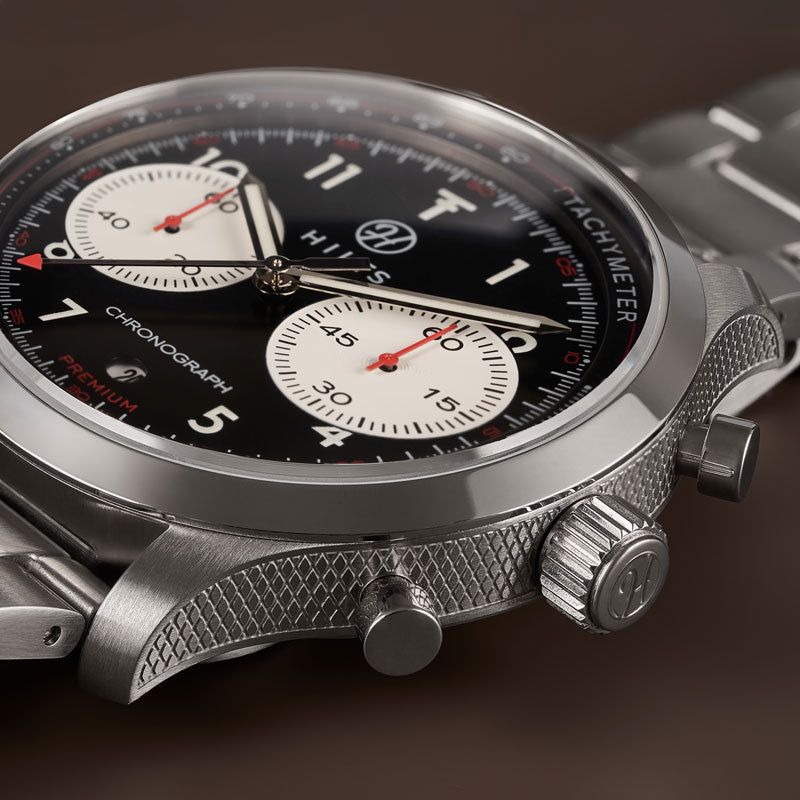
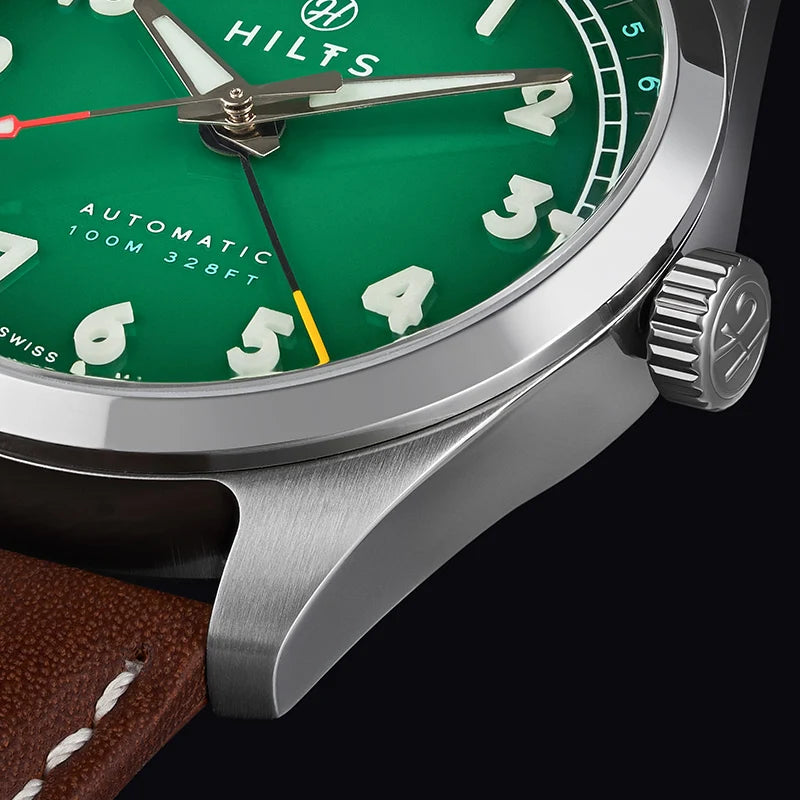
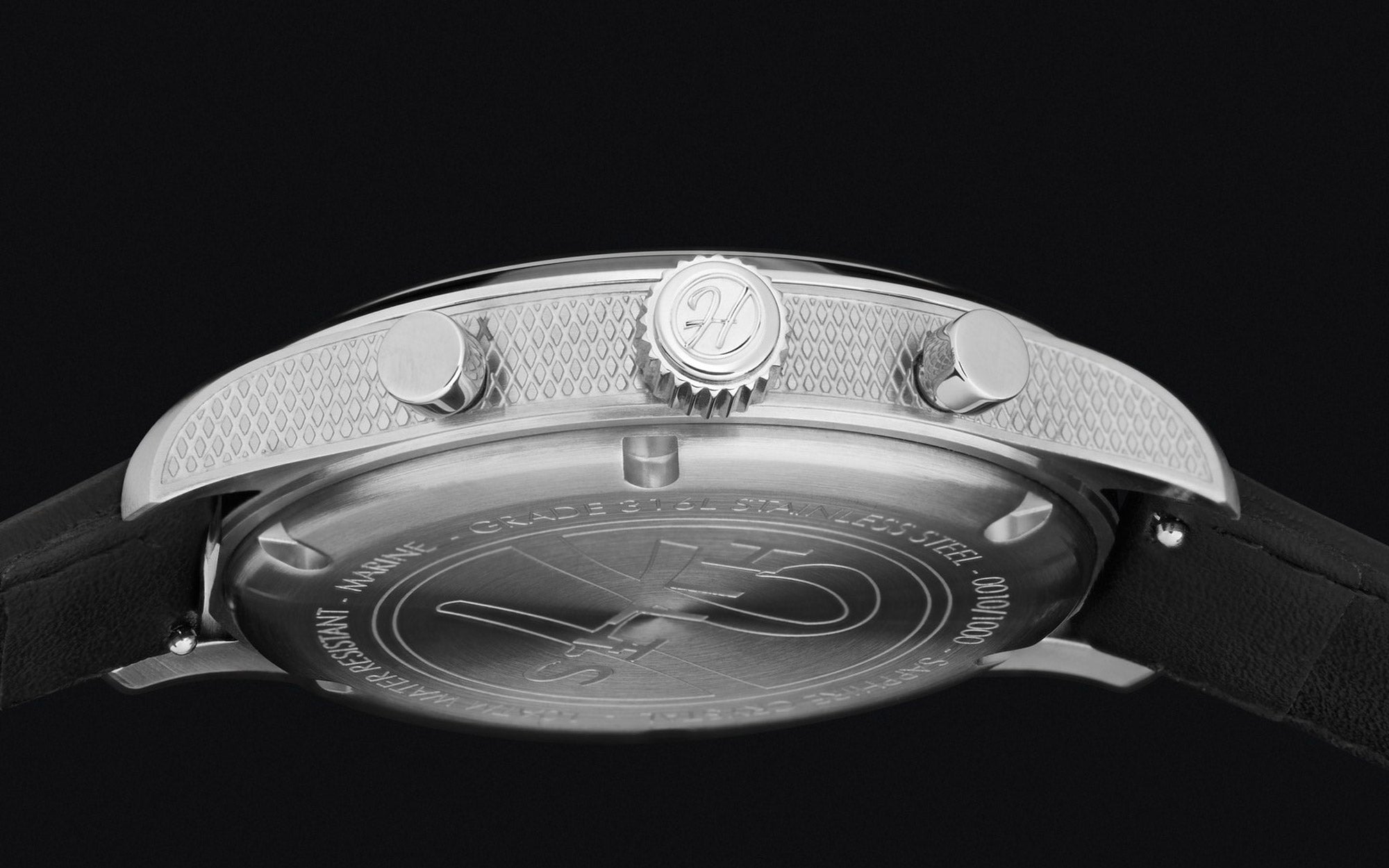
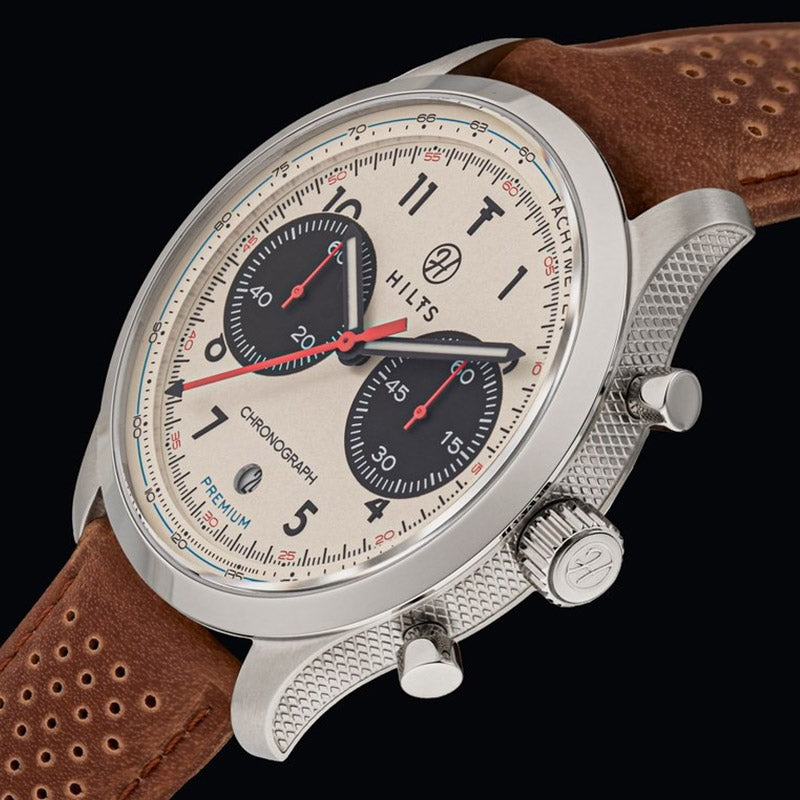
316L stainless steel is what we use for every Hilts watch. The weight is intentional, it settles on the wrist with quiet authority, feeling like a companion rather than an accessory. And its ability to carry multiple finishes simultaneously is what allows our designers to create the contrast and depth that makes a Hilts watch unmistakable. It is not the lightest material, nor the rarest. It is simply the best all-round choice for a watch built to be worn every day, for the rest of your life.
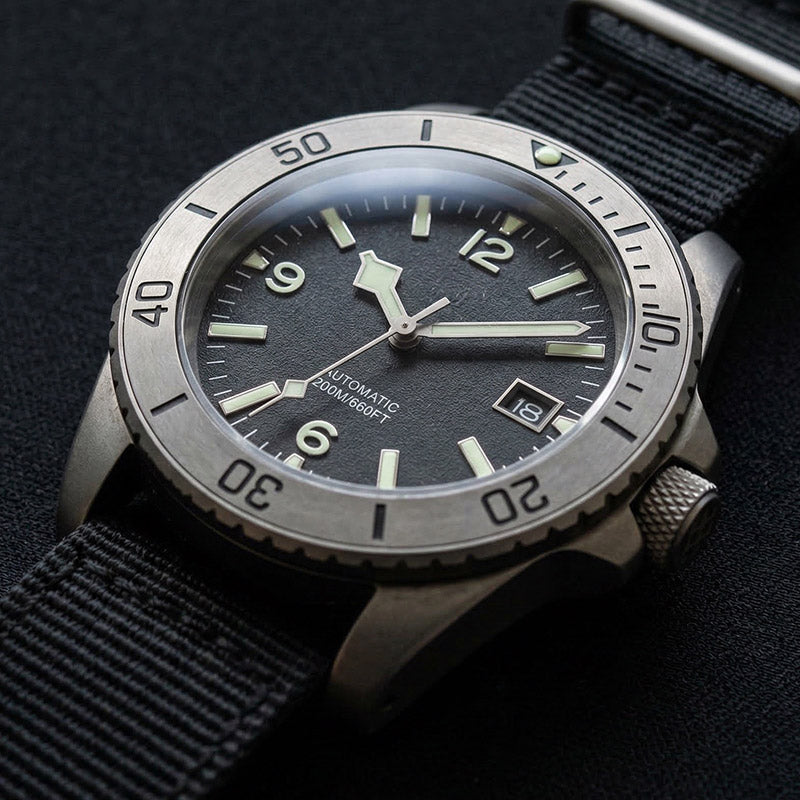
Titanium
Lightweight, exceptionally strong, and kind to the skin. Titanium has earned its place in the watch world not through prestige, but through genuine performance.
Properties:
- Roughly 40% lighter than steel, a significant difference you feel immediately on the wrist
- Harder surface than steel, making it more resistant to everyday scratches and scuffs
- Hypoallergenic, contains no nickel, making it the ideal choice for anyone with metal sensitivities or skin reactions to steel
- Exceptional strength-to-weight ratio, lighter than steel but no less robust
- More demanding to machine and polish than steel, which is reflected in the price of titanium watches
- Typically finished in matte or satin rather than high polish, which suits its understated, technical character
Titanium is the choice of those who prioritise comfort and wearability above all else. Worn all day, every day, its lightness becomes something you notice in its absence, put on a steel watch afterwards and the difference is immediate. What titanium trades for that lightness is a certain warmth and presence that steel carries naturally. Neither is superior. They simply suit different people, different wrists, and different relationships with what a watch should feel like to wear.
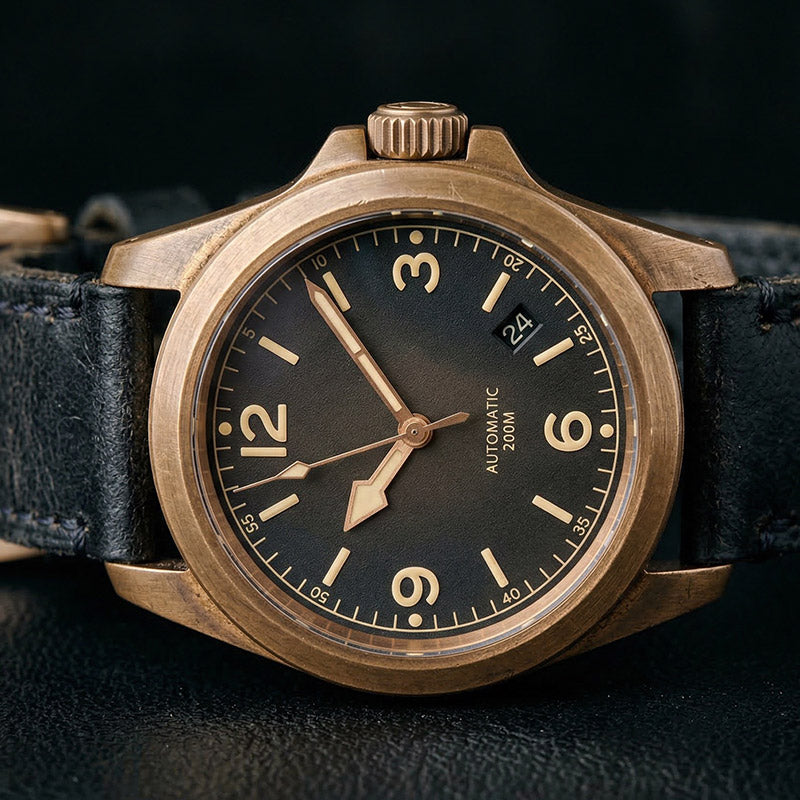
Bronze
No two bronze watches age the same way. The patina that develops over time is entirely your own; shaped by your skin chemistry, your climate, and the life you live in it.
Properties:
- Warm, rich tones that sit closer to gold than steel, giving bronze watches an immediate vintage character
- Reacts naturally with oxygen, moisture, and skin oils to form a protective patina on the surface
- The patina deepens and evolves over time, no two wearers will develop the same finish
- Commonly used in retro-styled dive watches, where the aged aesthetic suits the tool-watch heritage
- Requires occasional maintenance if you want to manage or slow the patina's development
- Some skin types react to bronze's copper content, which can cause mild discoloration or irritation on the wrist, worth testing before committing
Bronze rewards patience and an appreciation for things that change with time. The watch you buy is not the watch you'll have in five years. It will be richer, more personal, and entirely unrepeatable. For those who find beauty in that evolution, bronze is one of the most characterful materials in watchmaking. For those who prefer their watch to look consistent and controlled, steel or ceramic will serve them better.
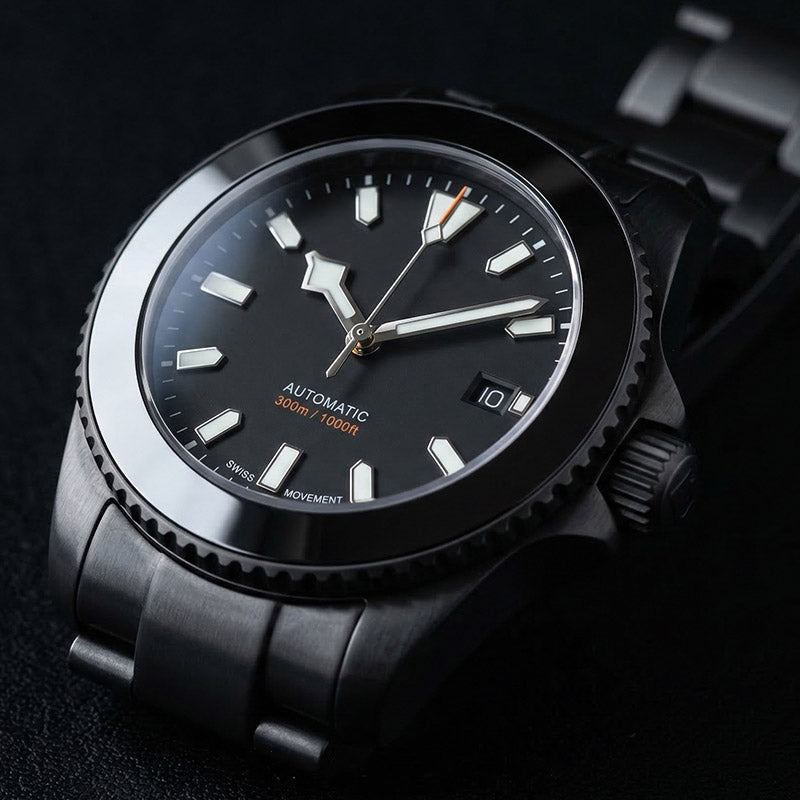
Ceramic
Properties:
- Extremely hard material (second only to sapphire and diamond in hardness)
- Virtually scratch-proof in everyday use; swipes, grazes and surface contact leave no mark
- Lightweight, similar to titanium
- Hypoallergenic, no nickel or alloys that cause skin reactions
- Brittle under sharp impact, a hard drop onto a stone floor can chip or shatter the case
- Limited finishing options compared to steel (typically matte or gloss only)
Ceramic suits someone who wants their watch to look as pristine in year ten as it did on day one. The trade-off is that the material that resists scratches so well is also the material that can't absorb a hard knock. It's a watch for the careful wearer, or someone whose daily life rarely puts their watch at risk. If you work with your hands or live an active life, steel's ability to dent and scratch without shattering is arguably the more forgiving choice.

Gold & Precious Metals
The choice of royalty, boardrooms, and black-tie occasions. Gold, platinum, and precious metals carry an unmistakable presence, but they demand respect, care, and a clear understanding of what you're buying.
Properties:
- Softer than steel, scratches and dents accumulate with everyday wear
- Denser and heavier than steel, which gives it a significant presence on the wrist
- Material cost alone makes precious metal watches substantially more expensive
- Yellow gold carries warmth; white gold and platinum look similar to steel but cost many times more
- Develops a natural patina of micro-scratches over time. Some consider this character, others prefer regular polishing to restore the finish
- Requires more careful handling than steel or titanium
If your watch needs to work for a living; worn daily, worn actively, worn without too much thought, precious metals will show every moment of it. For those occasions, the durability and resilience of 316L stainless steel is simply the more practical choice.
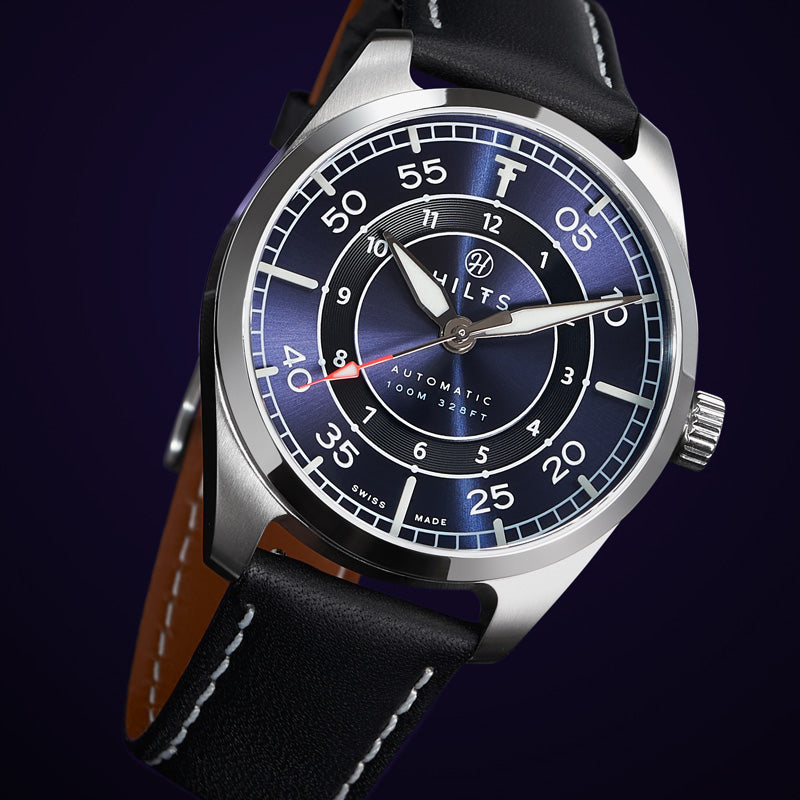
Why We Chose 316L Marine-Grade Stainless Steel
We chose steel because it's honest.
It has weight, which makes it feel like a companion, not an accessory.
And it can be polished, brushed, or blasted to create contrast and depth.
Every Hilts watch; Hero Diver, Heritage Aviator, and Precision Chronograph, is sculpted from marine-grade 316L stainless steel with a deliberate interplay of finishes including:
- Brushed lugs for strength and a matte, tool-like aesthetic
- Mirror-polished case sides for elegance and light play
- Blasted or polished bezels depending on the model
Our choice of 316L marine-grade stainless steel is a practical design decision as much as an aesthetic one. It gives us the durability to build watches that handle real life without compromise, the weight to create a presence on the wrist that feels considered and substantial, and the versatility to work across multiple finishes simultaneously; brushed, polished, and blasted. Steel earns its place in every Hilts watch not through tradition alone, but because nothing else balances all of those qualities as well.
Frequently Asked Questions
316L is a marine-grade stainless steel alloy that's corrosion-resistant, durable, and hypoallergenic for most people. The "L" means low carbon content, which makes it more resistant to rust and saltwater corrosion. It's the most common material for quality watches because it balances durability, weight, finishing options (can be polished or brushed), and cost. It's the workhorse of the watch world.
Neither is "better", they're different. Titanium is 40% lighter and more scratch-resistant, but it lacks the substantial feel of steel and is harder to polish to a mirror finish (most titanium watches look matte or brushed). If you have nickel allergies or want a lightweight watch, titanium is excellent. If you want heft and presence, steel is better. It's a matter of preference, not superiority.
Bronze is an alloy that reacts with oxygen, moisture, and skin oils to form a protective oxidized layer called patina. The color ranges from dark brown to greenish-blue depending on your environment, skin chemistry, and how you wear it. Every bronze watch ages uniquely, no two will look the same. You can polish it back to the original copper color, but most owners prefer the evolved patina.
Ceramic watches are virtually scratch-proof in normal daily wear, the material is second only to sapphire and diamond in hardness. However, ceramic is brittle. If you drop a ceramic watch onto a hard surface (concrete, tile) from enough height, it can chip or shatter rather than dent like steel would. It's extremely scratch-resistant but not impact-resistant.
Weight comes from case material and size. Steel is dense and heavy (which many people prefer for the substantial feel). Titanium and ceramic are much lighter. Larger case diameters and thicker cases add weight regardless of material. Some buyers want weight (it feels serious and well-made), others want lightness (all-day comfort). Neither is wrong, it's simply personal preference.
316L stainless steel. It's durable, corrosion-resistant, takes a beating without catastrophic failure (scratches can be polished out), looks good in both casual and formal settings, and ages with character. Titanium is also excellent for daily wear if you prefer lightweight. Bronze requires more maintenance. Ceramic is beautiful but brittle. For most people, steel is the smart choice.
Read more
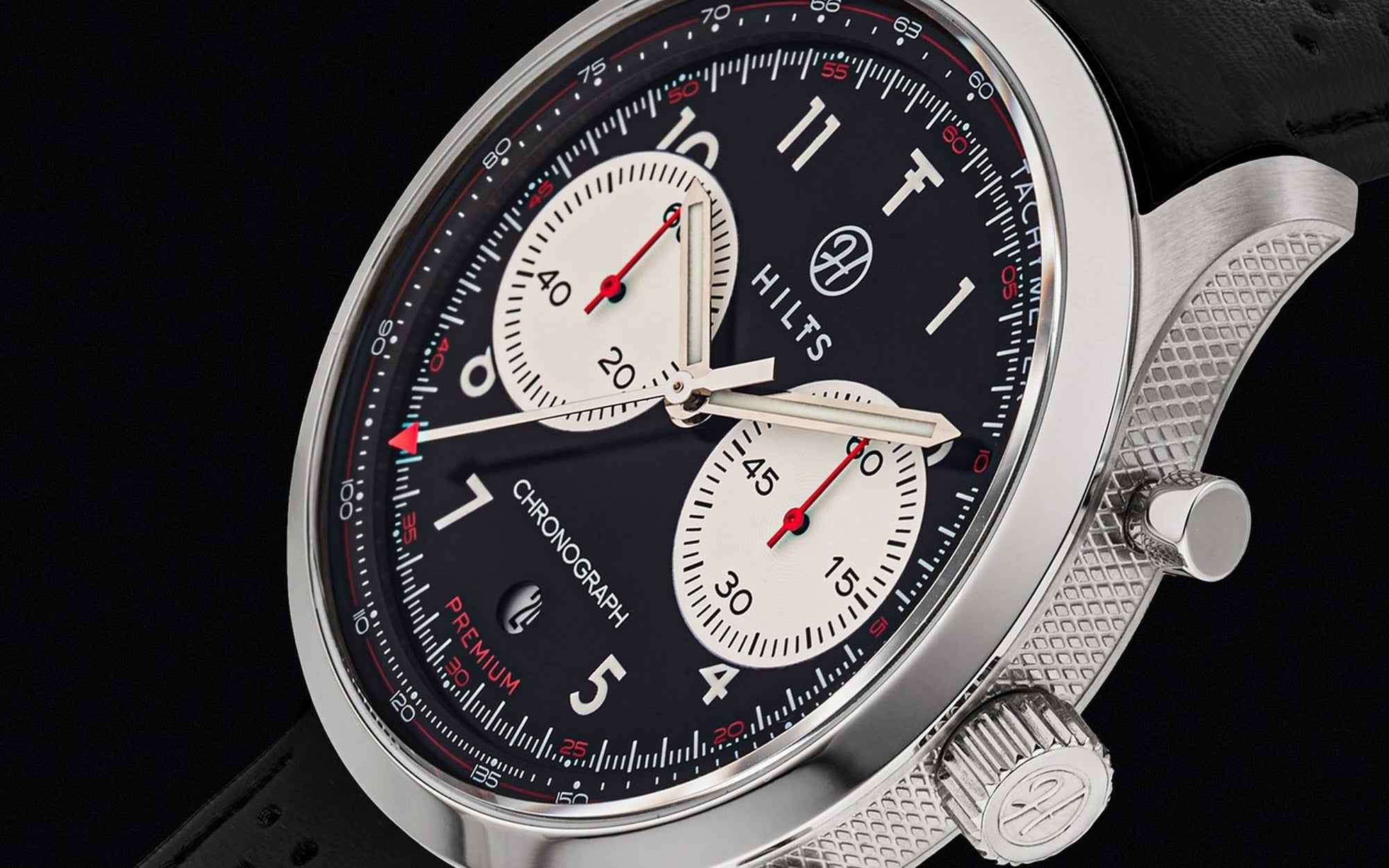
Chapter 2: The Case for Complications
A complication is any watch function beyond hours, minutes, and seconds. A complication adds value when you actually use it and it's integrated into the design.
Read more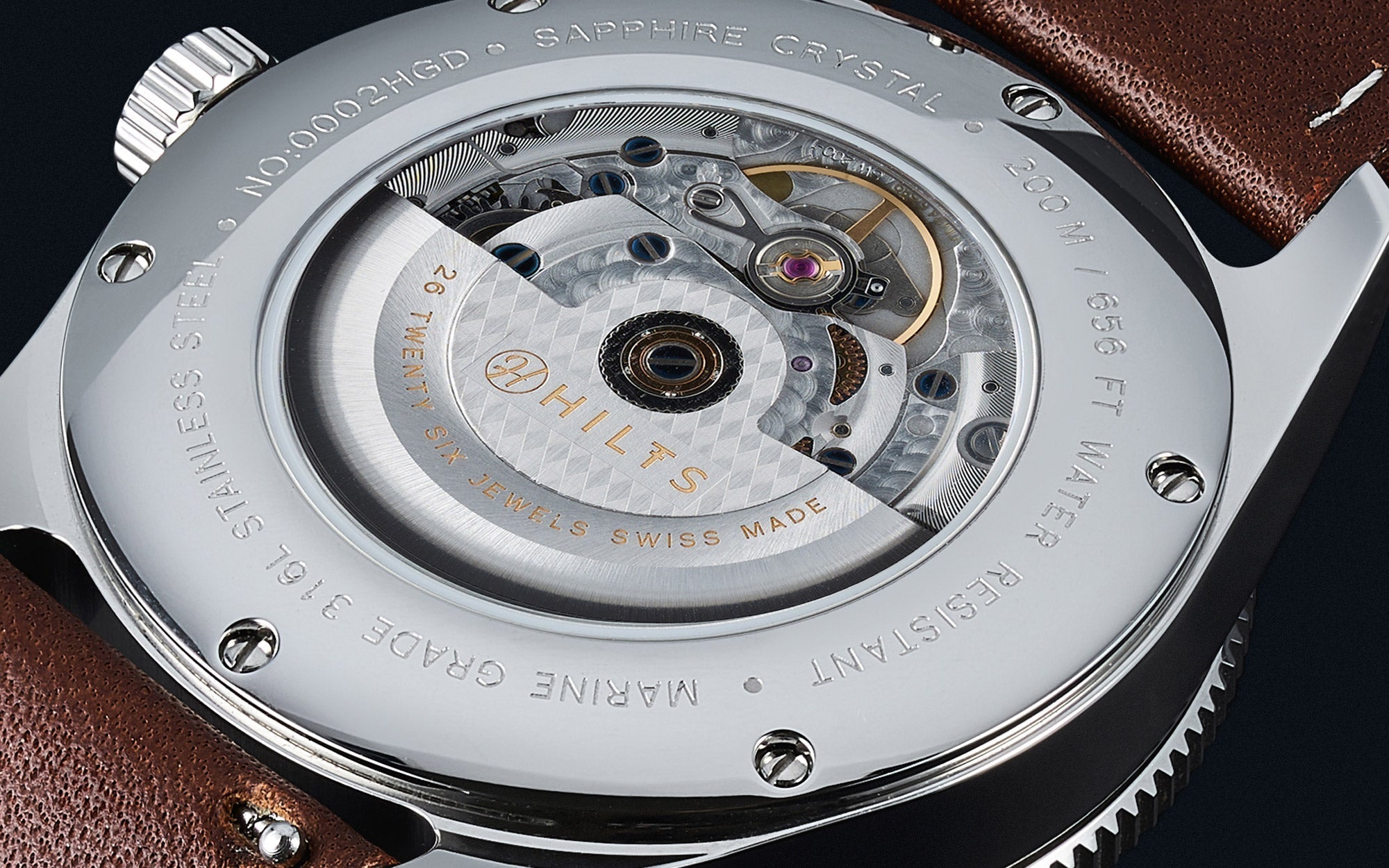
Chapter 4: The Movement: What Matters
The movement is the engine of a watch. It powers the hands, drives any complications, and determines how the watch performs over time.
Read more
Want All The Chapters?
Join our newsletter to get all 8 chapters delivered to your inbox, along with regular news updates and early access to new releases.
No Confirmation? Please check your spam or promotions folder to confirm your subscription.